
Re-Brand notification
- Close-able
- false

Read our top tips for spotting pension scams and find out where you can receive support if you've been a victim of a scam.
Pension scams are designed to trick people out of their retirement savings. Scammers may try to convince you to transfer your pension, invest in opportunities that aren't genuine, or share personal details that could put your money at risk.
They can contact you through phone calls, emails, text messages, social media or face-to-face. Scammers often look and sound professional, using persuasive tactics and fake credentials to build trust.
Whatever approach they take, their aim is the same: to access your pension savings.
Common scams include:
All of these scams are designed to appear convincing, often using real looking websites, fake endorsements, or imitating legitimate firms.
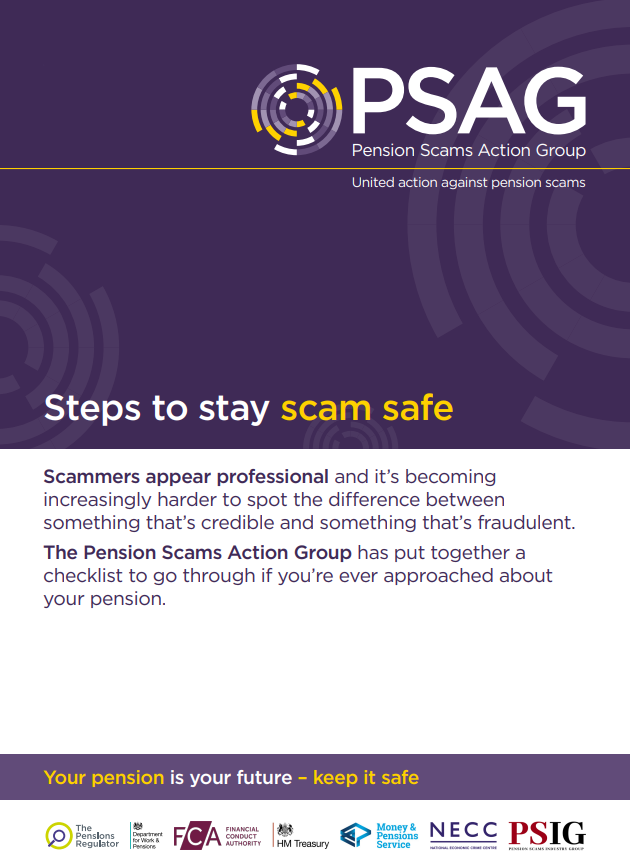
Check out the safety information from The Pensions Regulator. They have put together a checklist to go through if you're ever approached about your pension.
Pension scams are getting more sophisticated. So it’s vital to stay informed and protect your hard- earned savings with smart decisions.
Here are our top tips to help make you more scam savvy.
Unsolicited contact is usually unreliable, so trust your instincts. A free pension review may sound helpful, but it’s better to be cautious and reject unexpected offers.
Decisions about your pension are very important, so take your time and never feel rushed into making them. Consider your options, read any information you receive carefully and if you have questions, contact a regulated financial adviser.
It is also advisable to understand your plan, so you can avoid common scams – like offers to access your money early. Early withdrawals are rarely allowed and could cause financial penalties. Being familiar with the conditions of your pension plan will help you to know your rights.
If you’re promised an amazing deal, like a guaranteed return, do your research and check who you’re dealing with first. Be especially aware of offers that seem ‘too good to be true’. The more information you find out, the less time and money you'll waste.
Remember, knowledge is empowering, and sticking to our simple tips will help to protect you and your pension from scammers.

Keep up-to-date with the latest scams and topical news stories from the Financial Conduct Authority and Report Fraud.
Our handy guide provides you with more information on how you can protect yourself from scams, or you can take a look at our top scam savvy tips to help you.
Be wary of unsolicited phone calls, emails and letters as well as cold callers to your home. This could be part of a scam.
You should never feel rushed into making an investment decision. Read any documents you receive thoroughly and always get advice from a regulated financial adviser. If you don’t have a financial adviser, you can visit MoneyHelper to find the right one for you.
Make sure you understand your pension plan. This could help you avoid common scams, like offers to access your money early.
If an offer seems too good to be true, it probably is. Trust your instincts and research the named individual and/or company before taking the next step.
If you think you’ve been a victim of a scam, you can:
There are also a number of support agencies you can reach out to:
Citizens Advice is a national organisation offering free, confidential, impartial advice, to support victims of scams, particularly those who are struggling financially.

Victim Support is an independent charity dedicated to supporting victims of crime and traumatic incidents.
When life is difficult, Samaritans are here – day or night, 365 days a year. You can call them for free on 116 123 or email them at jo@samaritans.org.
If you do find that you're a victim of a scam, you should be extremely cautious of any future contact from someone purporting to be able to reclaim funds lost to a scam, as it's highly unlikely that an unfamiliar person will legitimately contact you for this reason.
You should question how they've found your contact details and should check they're genuine by verifying their contact details from an independent and reliable source. You can find out more in this article from report fraud.
The Financial Conduct Authority provides information to help you avoid investment and pensions scams.

Offering independent advice Which? have been championing consumer rights since 1957.
We're committed to protecting our customers from scammers and will continue to look at ways to provide educational information to help you understand the risks and how best to avoid scams. The Pension Regulator asked trustees, providers and administrators to pledge to do all they can to protect customers and follow the principles of the Pension Scams Industry Group Code of Good Practice. We've signed up to this pledge as part of our commitment to stopping scammers.